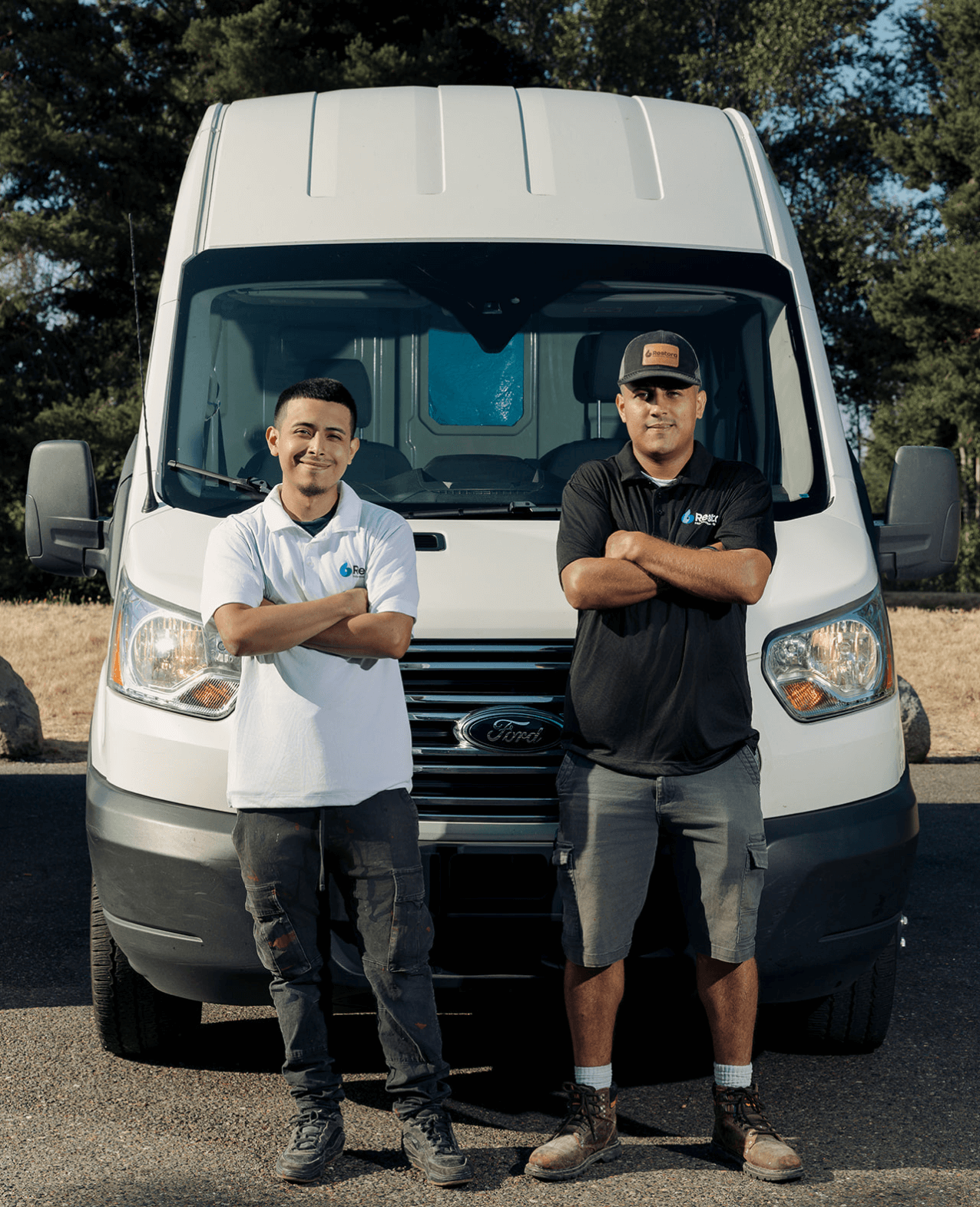
Washington Certified Veteran-Owned Business

A sewage backup is one of the most hazardous emergencies your home or business can face. The water carries bacteria, viruses, and parasites that make the affected area unsafe within hours, and the contamination soaks into floors, drywall, and belongings faster than most people expect. Restora provides professional sewage cleanup services throughout Seattle and the Greater Puget Sound region, with IICRC-certified technicians who contain the hazard, remove the sewage, and restore your property to a safe, sanitary condition.
We're veteran-owned and operated, and we treat every sewage emergency with the urgency it demands. Call us any hour, any day, and a crew responds with the equipment and protective gear this work requires.


We're here to help
We treat your home with the same care and attention we'd give our own. Every water damage call starts with a clear assessment, fast mitigation, and plain communication about what can be dried, what needs to be removed, and what your insurance carrier may need from the restoration team.
.avif)
.avif)
.avif)
.avif)
Sewage damage doesn't wait for business hours, and neither do we. Restora answers emergency calls 24 hours a day, 7 days a week, because every hour that raw sewage sits on your property, contamination spreads deeper into structural materials and the health risk grows.
When you call, we send a crew equipped for Category 3 water, the industry classification for sewage and black water. Our technicians arrive with full personal protective equipment, commercial extraction machines, and hospital-grade disinfectants. Big job or small, containment starts the moment we walk in; the contamination stops spreading while we work.
Restora handles sewage and black-water jobs across the Seattle metro area for both homeowners and commercial properties. If you're standing in front of a sewage backup right now, stop reading and call us. We'll walk you through what to do while the crew is on the way.
When the municipal main or your lateral line backs up, sewage comes up through drains, toilets, and tubs, often on the lowest level of the building. We extract the sewage, sanitize the affected rooms, and coordinate with your plumber on the line repair.
An overflow involving waste is a Category 3 event even when it looks minor. We clean and disinfect the bathroom and any rooms the water reached, including flooring layers underneath.
A failed tank can push sewage back into the home or spread it across the yard; we clean up both.
Basements collect backups because they sit at the low point of the plumbing system. We remove standing sewage, strip unsalvageable materials, and dry the space fully.
Restaurants, offices, and multi-unit buildings have more at stake with every hour of closure. We work fast, contain the affected zone, and document everything for your insurer and your health inspector.
The restoration industry classifies water damage into three categories, and the category determines how the cleanup must be handled. The IICRC, the certifying body for the restoration industry, defines them this way:
Category 3 water can't be handled like an ordinary water leak. Contaminated porous materials such as carpet, padding, and saturated drywall usually can't be sanitized and must be removed. Surfaces that stay need cleaning and disinfection with antimicrobial agents, not household cleaners. There's also a time factor: even Category 1 water degrades toward black water when it sits for more than 48 hours, which is why our sewage cleanup services prioritize immediate extraction over everything else.
This classification is also why DIY cleanup is a genuine safety risk rather than a money-saving option. Mopping and household disinfectants leave pathogens behind in materials you can't see into, and the physical act of cleaning can aerosolize contaminated droplets you then breathe in.
Raw sewage carries a dense load of disease-causing organisms. A single milliliter can contain over a million bacteria, and the pathogens found in black water include E. coli, Salmonella, Hepatitis A, and parasites such as Giardia. These organisms enter the body through skin contact, especially cuts and abrasions, through accidental ingestion, or by inhaling droplets stirred into the air during cleanup.
The risk doesn't end when the standing water is gone. Moisture left inside walls and under flooring feeds mold growth within 24 to 48 hours, and residue on surfaces can remain infectious for weeks. Some bacteria found in sewage survive on unsanitized surfaces for 100 days or more.
This is why professional sewage backup cleanup follows strict protocols: full protective equipment for technicians, containment barriers around the affected area, removal of materials that can't be saved, and verification that the space is dry and sanitized before anyone moves back in. Our job isn't finished when the mess is gone. It's finished when the space is safe for your family or your employees again.


It takes real industry knowledge and a deep understanding of the system to successfully challenge an insurance company, and Restora proved they have both.
Their team came in 2 hours after our emergency call and got to work immediately. They were professional, easy to work with, and answered our questions.
I had a lot of water damage resulting from a leaky water heater. Fortunately we were able to get help from Restora Services in time to avoid any mold.
The Restora team helped me navigate a tough water emergency and I would definitely use them again.
A pipe broke in my house and flooded the kitchen - Restora came in and fixed the issue quickly and made the entire process seamless. Great service and customer care.
I had an excellent experience with Restora after a water damage incident in my home. Their team was professional, responsive, and thorough in their work, ensuring that every corner was addressed.
They were very responsive, professional, and knowledgeable about every step of the restoration process.
Also a big plus they’re a veteran owned business! Awesome group of folks and incredible customer service.
Raw sewage carries a dense load of disease-causing organisms. A single milliliter can contain over a million bacteria, and the pathogens found in black water include E. coli, Salmonella, Hepatitis A, and parasites such as Giardia. These organisms enter the body through skin contact, especially cuts and abrasions, through accidental ingestion, or by inhaling droplets stirred into the air during cleanup.
The risk doesn't end when the standing water is gone. Moisture left inside walls and under flooring feeds mold growth within 24 to 48 hours, and residue on surfaces can remain infectious for weeks. Some bacteria found in sewage survive on unsanitized surfaces for 100 days or more.
This is why professional sewage backup cleanup follows strict protocols: full protective equipment for technicians, containment barriers around the affected area, removal of materials that can't be saved, and verification that the space is dry and sanitized before anyone moves back in. Our job isn't finished when the mess is gone. It's finished when the space is safe for your family or your employees again.
Restora runs every sewage job the same disciplined way, from a toilet overflow in a condo to a mainline backup in a commercial building. Here's what to expect:
We inspect the affected area, identify the source and category of the water, and set containment barriers so contamination can't migrate into clean parts of the building. We also shut down HVAC circulation through the affected zone when needed.
Commercial extraction equipment removes sewage, solids, and contaminated water. Porous materials that can't be sanitized, such as soaked carpet, padding, and damaged drywall, are removed and disposed of safely.
We clean every remaining surface in the affected area, then treat it with hospital-grade antimicrobial disinfectants to kill the pathogens sewage leaves behind. Deodorizing follows, because the smell outlasts the water.
Air movers and commercial dehumidifiers dry the structure completely. We take moisture readings throughout to confirm walls, subfloors, and framing reach safe levels, which shuts down the conditions mold needs to grow.
We photograph and document the damage, the affected materials, and every step of the work. You receive a professional, itemized record that supports your insurance claim and gives you a clear picture of exactly what was done.
Once you've called Restora, a few simple steps protect your health and your claim while the crew is en route:
What you shouldn't do matters just as much. Don't run a household wet vac, don't spread the water while attempting to mop it up, and don't run fans that blow air out of the contaminated area into clean rooms.
Sewage claims are more complicated than standard water damage claims, because many homeowner policies only cover sewer and drain backups when the policy includes a specific water backup endorsement. Restora helps you work through that process from the first day.
We document the loss thoroughly with photographs, moisture readings, and a professional, itemized estimate of the work, which is exactly what adjusters need to process a claim. We communicate directly with your insurance company when you want us to, provide regular updates as work progresses, and make sure nothing about the cleanup is left to interpretation. If your policy doesn't cover the loss, you'll have a clear, honest scope of work and pricing before we proceed, with no surprises.

Sewage cleanup is a job where corners can't be cut, and Restora was built by people who don't cut them. We're a veteran-owned and operated restoration company, and we bring military precision to hazardous, detail-critical work like Category 3 cleanup.
We serve homeowners and commercial properties throughout Seattle and the Greater Puget Sound region, including Bellevue, Tacoma, Kent, Renton, Federal Way, and Shoreline. Visit our areas we serve page for the full list.


Answers to a few of our most frequently asked questions. Don't see what you're looking for? Contact us and we'll be happy to help.
Not in or near the affected area. Sewage releases airborne contaminants, and the pathogens in the water spread on shoes, paws, and hands. Keep the area sealed off until it has been professionally cleaned, disinfected, and dried. Once we verify the space is sanitary and dry, it's safe to use again.
We don't recommend it, even for spills that look minor. Any water containing waste is Category 3, and household cleaners don't eliminate the bacteria, viruses, and parasites it carries. DIY cleanup also tends to push contamination deeper into porous materials, which turns a small professional job into a larger one later.
We answer calls 24/7 and dispatch crews across the Seattle metro area around the clock. Response time matters with sewage; contamination spreads and materials absorb it by the hour. We treat every sewage call as an emergency.
It depends on your policy. Many standard policies only cover sewer and drain backups if you carry a water backup endorsement, which is an optional add-on. Check your policy or ask your agent. Either way, Restora documents the full loss and provides the itemized records your insurer needs, and we'll help you understand what your claim covers.
A contained incident such as a single-bathroom overflow can often be cleaned and dried in a few days. Larger backups that saturate flooring and walls take longer because structural drying has to finish completely before the space is safe. After our initial assessment, we give you a clear timeline and keep you updated as the work progresses.
Porous materials that absorbed sewage, such as carpet, padding, upholstered furniture, and saturated drywall, usually can't be sanitized and are removed and disposed of safely. Hard, non-porous items can typically be cleaned and disinfected. We assess each item, tell you what can be saved, and document everything that's removed for your insurance claim.